
Data Redaction
 (Representational Image | Source: Dall-E)
Quick Navigation:
- Data Redaction Definition
- Data Redaction Explained Easy
- Data Redaction Origin
- Data Redaction Etymology
- Data Redaction Usage Trends
- Data Redaction Usage
- Data Redaction Examples in Context
- Data Redaction FAQ
- Data Redaction Related Words
Data Redaction Definition
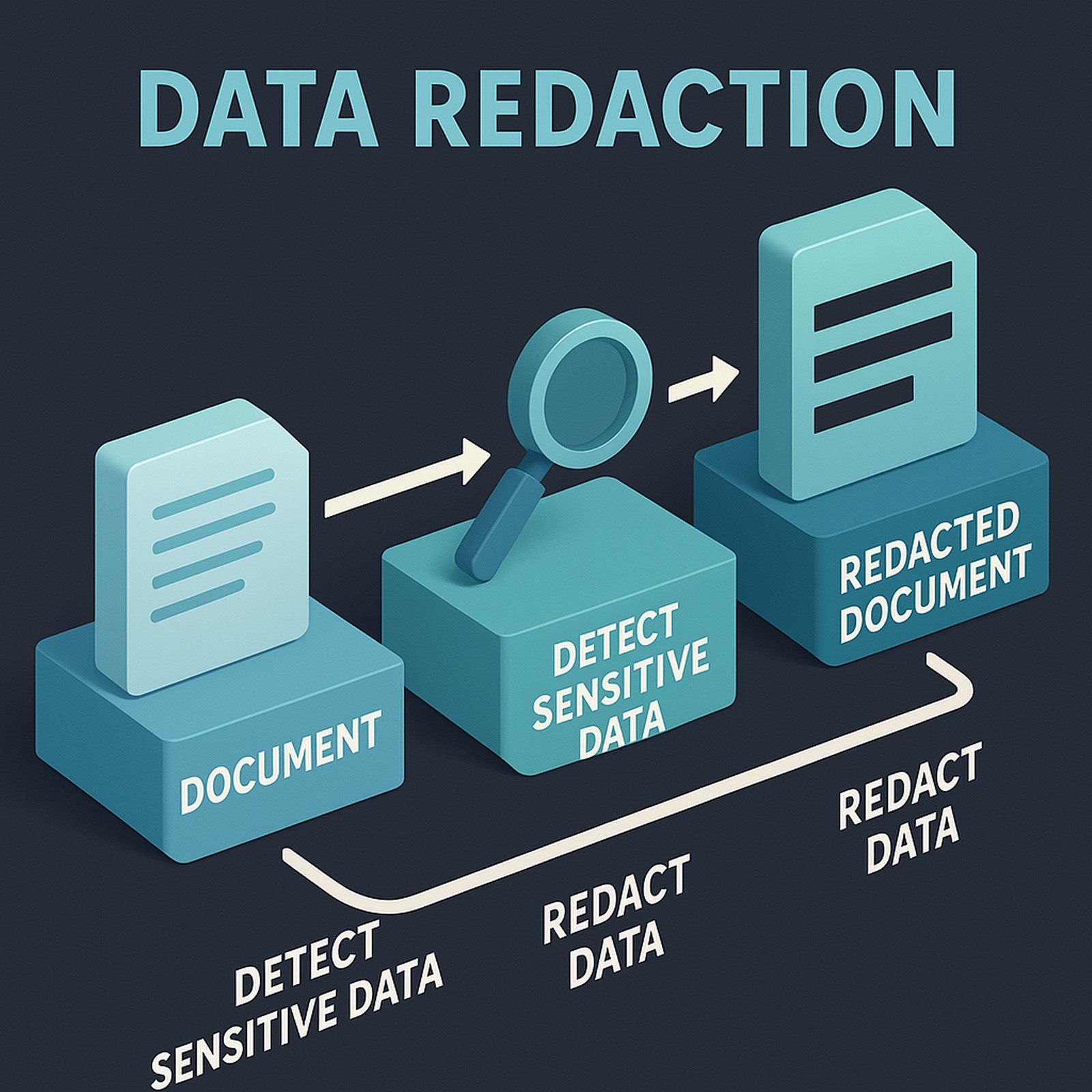
Data redaction is the process of obscuring or removing sensitive information from documents, databases, or digital records to protect confidentiality. It is widely used in legal documents, healthcare records, and cybersecurity. Redaction methods range from blacking out text in PDFs to dynamically masking database fields in software applications. Advanced techniques use AI to detect and redact sensitive data automatically.
Data Redaction Explained Easy
Imagine you wrote a secret note but don’t want someone to read a part of it. You take a black marker and cover the secret words before showing the note to others. That’s what data redaction does—it hides important information so only the right people can see it.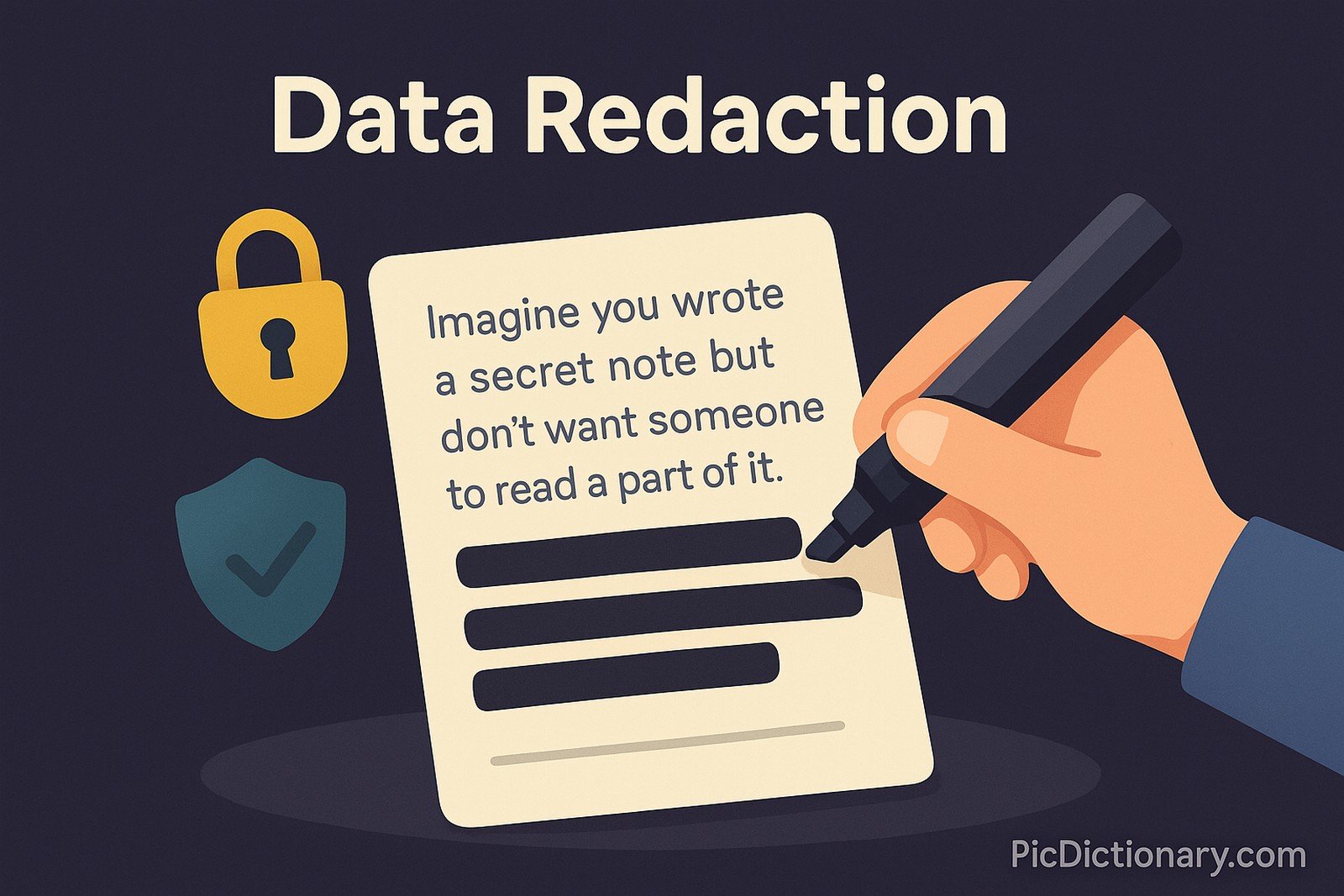
Data Redaction Origin
Data redaction has its roots in legal and governmental document management. Early redaction practices involved manually censoring sensitive information in paper documents. With the rise of digital records, automated redaction tools became essential for protecting confidential data in electronic files.
Data Redaction Etymology
The word “redaction” comes from the Latin term “redigere,” meaning “to bring back” or “to organize.” Over time, it evolved to mean editing or censoring text for confidentiality.
Data Redaction Usage Trends
Data redaction is becoming more critical due to increasing privacy regulations like GDPR and HIPAA. Organizations are adopting AI-driven redaction solutions to automate and enhance data protection. With the rise of data breaches, redaction is essential in industries such as finance, healthcare, and legal services.
Data Redaction Usage
- Formal/Technical Tagging:
- Data Privacy
- Information Security
- Compliance & Regulations
- Typical Collocations:
- “data redaction software”
- “secure redaction process”
- “automated redaction system”
- “redacted sensitive information”
Data Redaction Examples in Context
- A law firm redacts client names from case files before publishing legal documents.
- In cybersecurity, data redaction is used to remove credit card details from logs.
- Government agencies redact classified information in public records to prevent security threats.
Data Redaction FAQ
- What is data redaction?
Data redaction is the process of obscuring sensitive information from documents or digital records to protect confidentiality. - How does data redaction work?
It works by blacking out, masking, or removing specific details from text, images, or databases using manual or automated tools. - Where is data redaction used?
It is used in legal documents, healthcare records, financial statements, and government reports to protect sensitive data. - What is the difference between redaction and encryption?
Redaction removes or obscures data permanently, while encryption secures data by making it unreadable without a decryption key. - Can AI automate data redaction?
Yes, AI-powered tools can automatically detect and redact sensitive data in documents, emails, and databases. - Is data redaction required by law?
Many regulations, such as GDPR and HIPAA, require redaction to protect personal and sensitive information. - What tools are used for data redaction?
Common tools include Adobe Acrobat for PDF redaction, database redaction software, and AI-powered redaction platforms. - What are the risks of improper data redaction?
If done incorrectly, sensitive information may still be retrievable, leading to security breaches and compliance violations. - Can redacted data be recovered?
If redaction is not applied correctly, such as using simple text overlays instead of proper removal, data may still be accessible. - What industries rely on data redaction?
Legal, healthcare, financial, and government sectors heavily rely on redaction to ensure compliance and confidentiality.
Data Redaction Related Words
- Categories/Topics:
- Cybersecurity
- Data Privacy Laws
- Document Security
Did you know?
In 2019, a major airline accidentally exposed redacted customer details because they used incorrect formatting, making the hidden data easily retrievable. This case highlighted the importance of properly implemented data redaction techniques.
PicDictionary.com is an online dictionary in pictures. If you have questions or suggestions, please reach out to us on WhatsApp or Twitter.Authors | Arjun Vishnu | @ArjunAndVishnu

I am Vishnu. I like AI, Linux, Single Board Computers, and Cloud Computing. I create the web & video content, and I also write for popular websites.
My younger brother, Arjun handles image & video editing. Together, we run a YouTube Channel that's focused on reviewing gadgets and explaining technology.




Comments powered by CComment