
Search Engine Optimization (SEO)
Quick Navigation:
- Search Engine Optimization (SEO) Definition
- Search Engine Optimization (SEO) Explained Easy
- Search Engine Optimization (SEO) Origin
- Search Engine Optimization (SEO) Etymology
- Search Engine Optimization (SEO) Usage Trends
- Search Engine Optimization (SEO) Usage
- Search Engine Optimization (SEO) Examples in Context
- Search Engine Optimization (SEO) FAQ
- Search Engine Optimization (SEO) Related Words
Search Engine Optimization (SEO) Definition
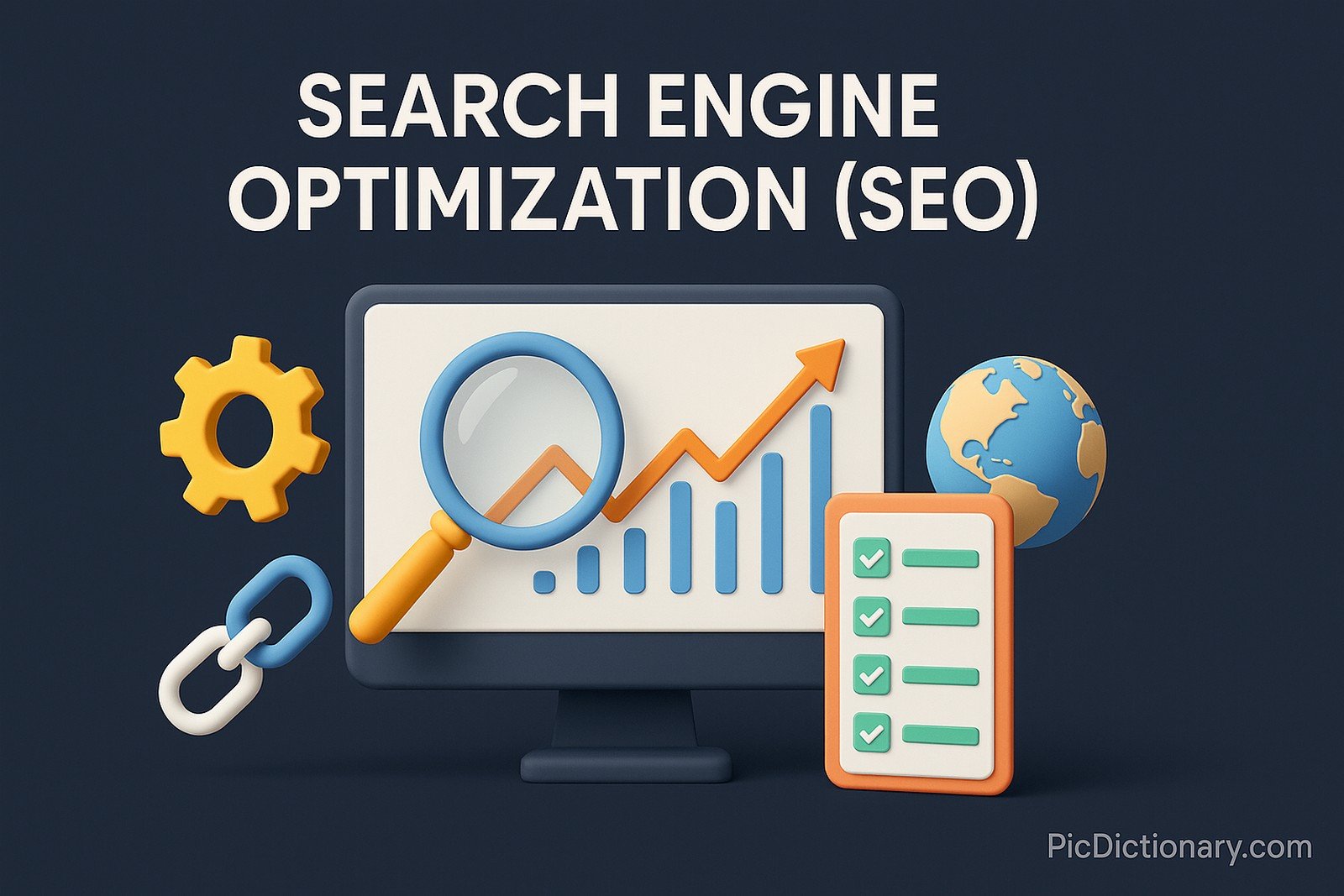
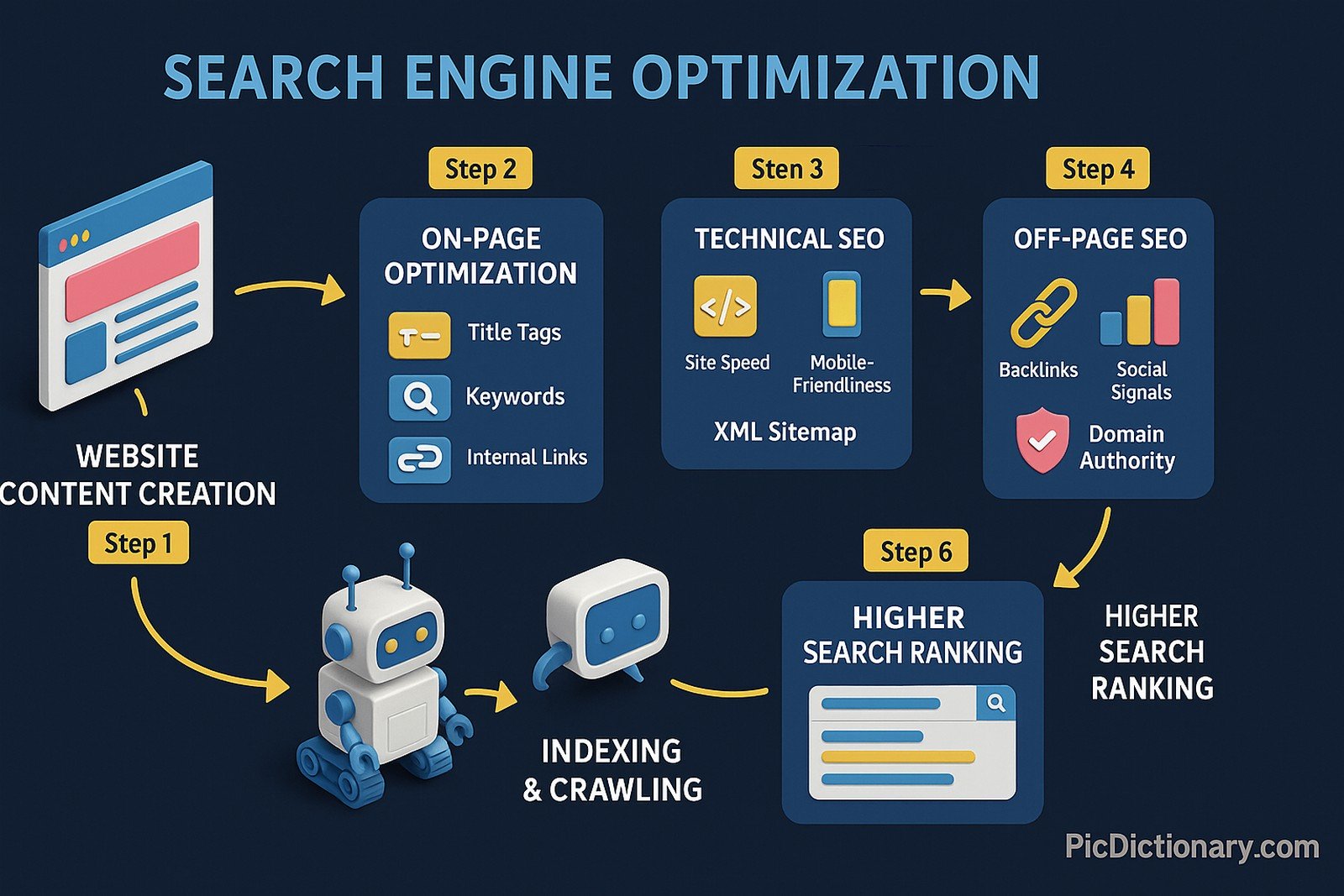
Search Engine Optimization (SEO) refers to the process of enhancing a website or web page's visibility in search engine results pages (SERPs). It involves optimizing content, HTML structure, and site performance to achieve higher rankings for relevant keywords. Techniques include on-page optimization (like meta tags and content optimization), off-page optimization (like backlinks), and technical SEO (like page speed improvements and mobile-friendliness). SEO is a cornerstone of digital marketing strategies worldwide.
Search Engine Optimization (SEO) Explained Easy
Imagine you have a lemonade stand, but it’s hidden in the back alley. SEO is like putting signs on the street, making your stand look attractive, and telling people where to find you. It helps more people see your stand (website) and come visit.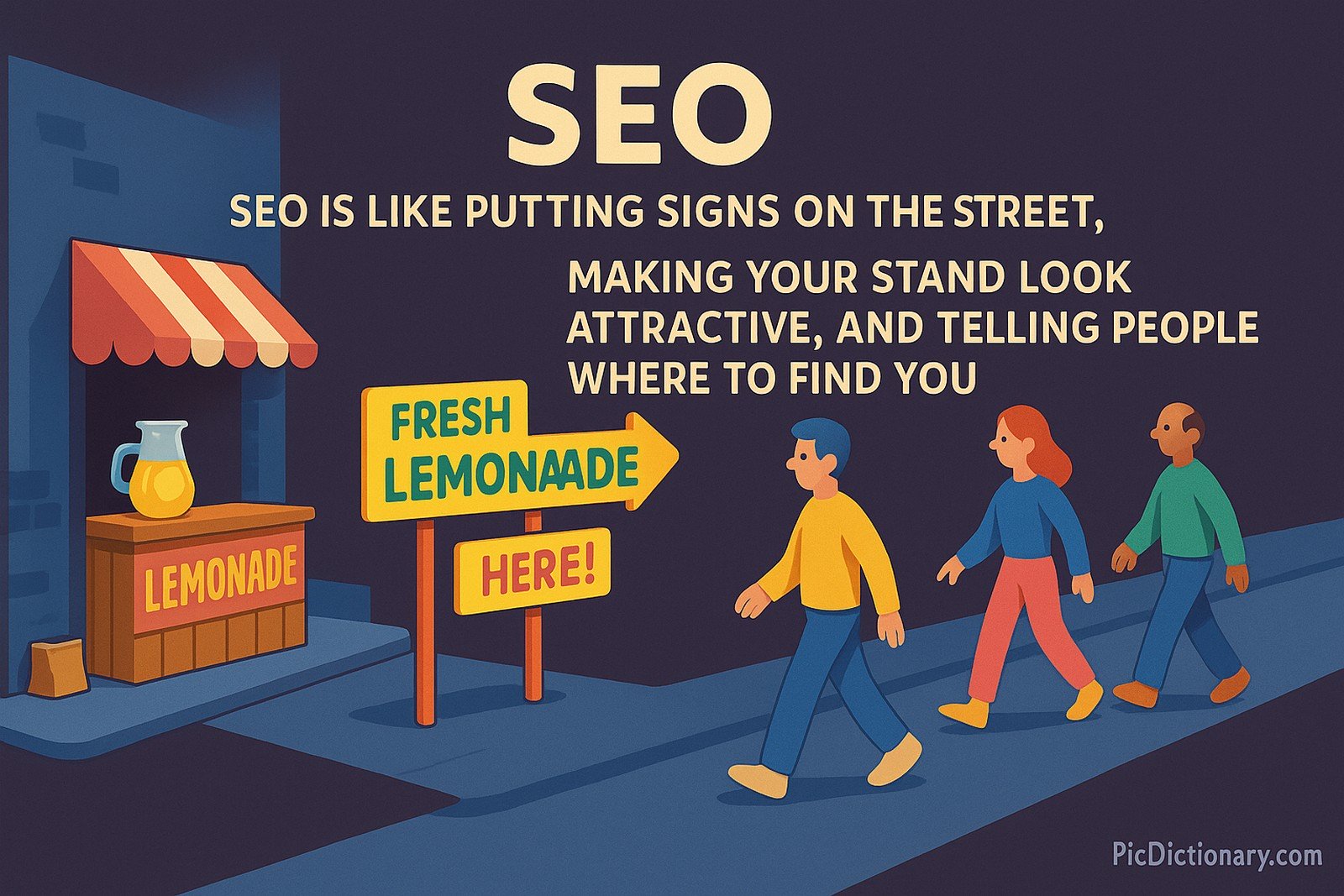
Search Engine Optimization (SEO) Origin
SEO originated in the mid-1990s when search engines like Yahoo and AltaVista started cataloging web content. As web competition grew, businesses and webmasters sought ways to appear higher in search results, giving rise to SEO as a key practice.
Search Engine Optimization (SEO) Etymology
The term combines "search engine," which refers to systems like Google or Bing that index online information, and "optimization," meaning making something as effective as possible.
Search Engine Optimization (SEO) Usage Trends
Over the past two decades, SEO has evolved with search engine algorithm updates, becoming more sophisticated. Practices shifted from keyword stuffing to focusing on user intent, content quality, and technical performance. The rise of voice search and AI tools further influence modern SEO strategies.
Search Engine Optimization (SEO) Usage
- Formal/Technical Tagging:
- Digital Marketing
- Web Development
- Content Strategy - Typical Collocations:
- "SEO strategy"
- "optimize website for search engines"
- "SEO audit"
- "SEO ranking factors"
Search Engine Optimization (SEO) Examples in Context
- A business uses SEO techniques to improve its website visibility on Google.
- Bloggers rely on SEO to attract organic traffic to their content.
- E-commerce websites optimize product pages using SEO for better search rankings.
Search Engine Optimization (SEO) FAQ
- What is Search Engine Optimization (SEO)?
It’s the practice of optimizing websites to rank higher in search engine results. - Why is SEO important?
SEO helps businesses attract more visitors and improve online visibility. - What are the key elements of SEO?
On-page SEO, off-page SEO, and technical SEO are the core elements. - How long does it take to see SEO results?
Typically, it can take 3-6 months for noticeable improvements. - Is SEO only for Google?
No, SEO applies to all search engines like Bing, Yahoo, and others. - Can I do SEO on my own?
Yes, but hiring professionals often brings faster, more effective results. - What are SEO ranking factors?
Factors include site speed, mobile-friendliness, backlinks, and content relevance. - Does social media affect SEO?
Indirectly; social sharing can drive traffic and visibility. - What tools help with SEO?
Popular tools include Google Analytics, Ahrefs, SEMrush, and Moz. - Is SEO a one-time effort?
No, SEO requires continuous work to keep up with algorithm changes.
Search Engine Optimization (SEO) Related Words
- Categories/Topics:
- Digital Marketing
- Content Marketing
- Web Analytics
Did you know?
In 1996, the band Jefferson Starship’s website became one of the first documented cases that led to the birth of SEO practices when their webmaster tried to rank higher by repeatedly using keywords like “Jefferson Starship” in hidden text!
PicDictionary.com is an online dictionary in pictures. If you have questions or suggestions, please reach out to us on WhatsApp or Twitter.Authors | Arjun Vishnu | @ArjunAndVishnu

I am Vishnu. I like AI, Linux, Single Board Computers, and Cloud Computing. I create the web & video content, and I also write for popular websites.
My younger brother, Arjun handles image & video editing. Together, we run a YouTube Channel that's focused on reviewing gadgets and explaining technology.




Comments powered by CComment